Author: Steven Katirai

7 Financial Forecasting Methods to Predict Business Performance

7 Financial Forecasting Methods to Predict Business Performance

Financial forecasting is a critical tool that businesses use to anticipate their financial future, aiding in strategic planning and decision-making. By predicting how resources will be allocated and how the market will behave, companies can prepare themselves for upcoming challenges and opportunities. In this article, we’ll explore 7 key financial forecasting methods, helping you understand how to leverage them to predict business performance accurately.

What Is Financial Forecasting?

Definition and Importance of Financial Forecasting

Financial forecasting is the process of estimating a company’s future financial outcomes based on historical data, trends, and market conditions. It involves analyzing data to predict key business metrics like sales, profits, expenses, and cash flow. Accurate financial forecasting helps businesses stay on track, make informed decisions, and minimize unexpected financial risks.

Role in Business Strategy and Performance Prediction

In the context of business strategy, financial forecasting serves as a blueprint for long-term growth and sustainability. It provides decision-makers with a clear picture of expected revenues, potential challenges, and areas of investment. By predicting future performance, companies can adjust their strategies to achieve desired financial goals, whether through cost-cutting measures, investment in new initiatives, or scaling existing operations.

Why Is Financial Forecasting Important for Businesses?

Helps Businesses Plan and Manage Resources

Financial forecasts enable businesses to anticipate changes in cash flow, ensuring they allocate resources effectively. With the right predictions, businesses can plan for significant expenditures, manage inventory, hire the necessary workforce, and schedule capital investments. Proper resource management based on forecasts can lead to operational efficiencies and cost savings.

Enhances Decision-Making and Reduces Financial Risk

With accurate forecasts, businesses can make well-informed decisions, whether related to pricing strategies, expansion plans, or funding requirements. By predicting future trends and performance, businesses are better equipped to avoid risks such as unexpected cash shortages or overspending.

Attracts Investors and Improves Company Appeal

Investors and stakeholders are more likely to invest in businesses that show strong financial predictions. By presenting reliable financial forecasts, companies can increase investor confidence and secure funding for future growth. Moreover, financial forecasting enhances the company’s credibility and strategic foresight, making it more appealing in the competitive marketplace.

7 Financial Forecasting Methods to Predict Business Performance

Quantitative Forecasting Methods

Quantitative forecasting methods are based on historical data and mathematical models. They rely heavily on numbers, making them ideal for businesses with ample data. Below are the key quantitative forecasting methods:

1. Percent of Sales Method

The Percent of Sales Method involves estimating future financial outcomes by taking a percentage of predicted sales. This method is commonly used for predicting costs, such as expenses and production costs, based on sales figures.

  • Explanation and Usage: To use this method, a business applies a fixed percentage to projected sales. For example, if sales are expected to increase by 10%, the cost of goods sold (COGS) might increase by the same percentage. 
  • Benefits: This method is simple and quick to implement, making it suitable for companies with relatively consistent historical sales data. 
  • Limitations: It assumes that the relationship between sales and costs remains constant, which may not always be the case in fluctuating markets. 

2. Straight Line Method

The Straight Line Method assumes that future values will increase or decrease at a constant rate over time. This method is straightforward and often used in predicting sales or costs that grow steadily.

  • What It Is and When to Use It: This method uses a fixed percentage growth rate for each period, making it ideal for businesses with predictable growth. 
  • Pros and Cons: The main advantage is its simplicity, but the downside is that it doesn’t account for any fluctuations in growth patterns, making it less useful for industries with volatile markets. 

3. Moving Average Method

The Moving Average Method helps smooth out fluctuations in data by calculating the average of a set number of past periods. This method reduces the impact of outliers or short-term variations.

  • How It Smoothens Data: By averaging data points over a set period (e.g., three months), this method provides a clearer trend line that highlights the general direction. 
  • Ideal Scenarios for Usage: The moving average method is best used for companies in industries with cyclical trends or those seeking to remove seasonal variations in data. 

4. Simple Linear Regression

Simple Linear Regression is a statistical technique that predicts future values by drawing a straight line through historical data points. It identifies a relationship between one dependent variable (e.g., sales) and one independent variable (e.g., advertising expenditure).

  • Concept and Calculation: This method calculates a line of best fit using past data, where the slope of the line indicates the relationship between the variables. 
  • When Is It Appropriate?: Simple linear regression is best used when there is a strong, linear correlation between the independent and dependent variables. It’s useful for businesses where one factor significantly influences another. 

5. Multiple Linear Regression

Unlike simple linear regression, Multiple Linear Regression involves more than one independent variable. This method accounts for multiple factors that may influence business performance, such as price, marketing efforts, and economic conditions.

  • How It Accounts for Multiple Variables: By factoring in several variables, this method provides a more accurate prediction, especially in complex business environments. 
  • Suitable Business Types: It’s ideal for businesses in dynamic markets where several external or internal factors influence outcomes, such as retail companies or those in the technology sector. 

Qualitative Forecasting Methods

Qualitative forecasting methods are based on subjective judgment and expertise, making them ideal for uncertain or new markets where historical data is insufficient.

6. Delphi Method

The Delphi Method involves gathering expert opinions to predict future trends. This method relies on surveys and iterative rounds of feedback to reach a consensus.

  • Expert-Driven Approach and Process: Experts in the field provide insights, and after several rounds of questioning, the final forecast is based on their combined opinions. 
  • Ideal for Uncertain or New Markets: This method is most useful for forecasting in industries with limited historical data, such as new product launches or emerging markets. 

7. Market Research Method

The Market Research Method involves gathering data from consumers, surveys, focus groups, and other market research tools to make forecasts based on current market trends and consumer behavior.

  • How Surveys, Focus Groups, and Consumer Data Help: This method allows businesses to gather direct insights from their target audience, enabling more accurate predictions about future demand and market conditions. 
  • Best Use Cases for Market-Driven Forecasts: Market research is particularly useful for businesses in competitive markets or those launching new products, as it helps them understand consumer preferences and market trends. 

How to Choose the Right Financial Forecasting Method for Your Business

Choosing the right forecasting method depends on several factors:

  • Industry: Different industries have varying levels of predictability. For instance, a tech startup may require more qualitative methods, while an established retail business can rely on quantitative methods. 
  • Data Availability: Businesses with historical data may benefit from quantitative methods, while those without sufficient data may rely on expert-driven qualitative methods. 
  • Business Size: Larger companies often have access to more data and sophisticated forecasting tools, while smaller businesses may need simpler methods. 

Balancing Quantitative and Qualitative Approaches

In many cases, businesses may find it beneficial to use both quantitative and qualitative forecasting methods. A mixed approach allows for a more comprehensive view of both the data-driven trends and the human insights that can influence business performance.

Improving Your Financial Forecasting Skills

To enhance your forecasting abilities, consider the following strategies:

  • Continuous Learning and Upskilling: Stay updated on new forecasting techniques, tools, and software. 
  • Using Forecasting Tools and Software: Leverage modern forecasting software to automate and streamline the forecasting process. 
  • Real-Life Case Studies and Applications: Look for case studies that demonstrate how businesses successfully use forecasting techniques in their operations to learn from real-world examples. 

FAQs About Financial Forecasting

What Are the Key Differences Between Forecasting and Budgeting?

While forecasting predicts future financial performance, budgeting sets financial limits for the business. Forecasting is based on predictions, while budgeting is focused on controlling spending within set parameters.

How Accurate Are Financial Forecasts?

Financial forecasts are inherently uncertain, as they are based on assumptions and predictions. However, with the right data and methodology, forecasts can be fairly accurate, especially in stable markets.

What Types of Financial Forecasts Should a New Business Focus On?

New businesses should focus on short-term forecasts, such as cash flow forecasts, sales forecasts, and expense projections. These forecasts help new companies manage initial uncertainties and plan for growth.

Conclusion

Financial forecasting is a critical tool for businesses seeking to predict performance and make informed decisions. By using the right methods—whether quantitative or qualitative—businesses can improve their ability to plan, allocate resources, and reduce financial risks. Ultimately, the right forecasting approach can support sustained business growth, enhance investor confidence, and lead to more informed decision-making.
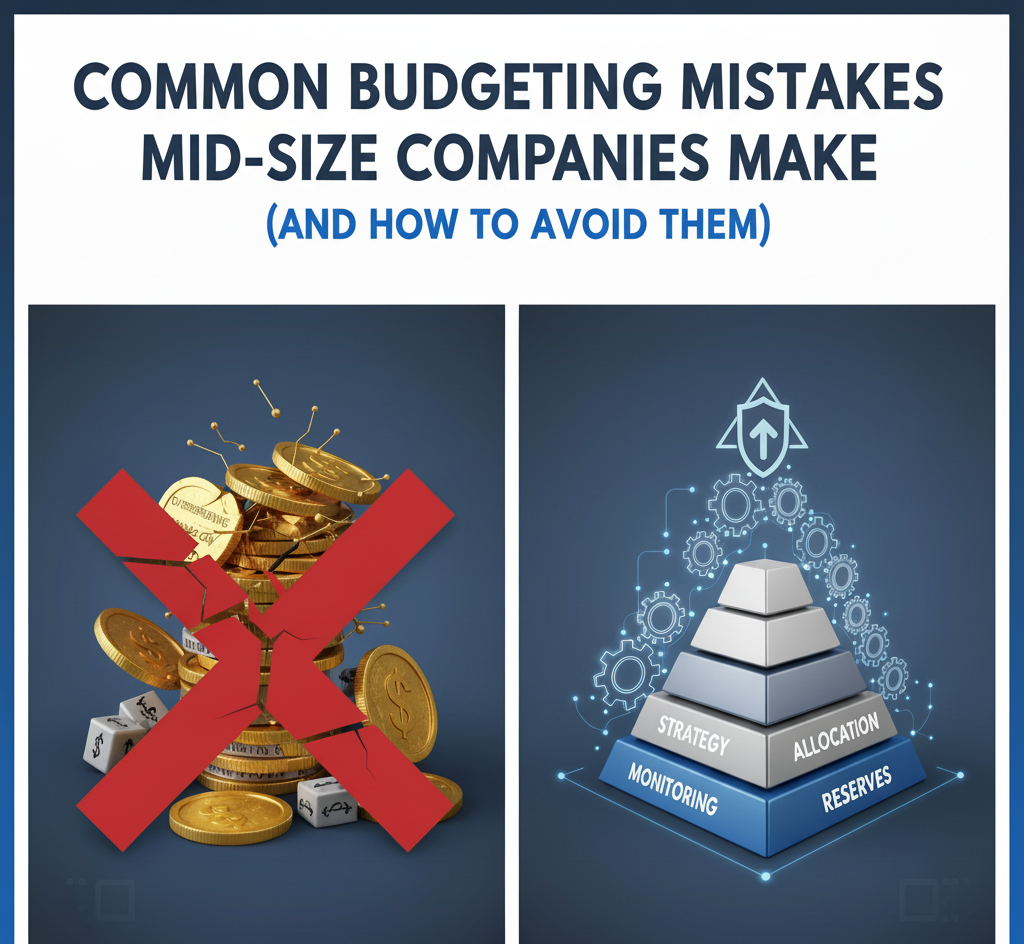
Common Budgeting Mistakes Mid-Size Companies Make (and How to Avoid Them)

Why Budgeting is Critical for Mid-Size Companies 

As mid-size companies scale, financial operations become increasingly complex. Budgeting is no longer just about allocating funds—it becomes a strategic activity that influences decision-making, growth, and profitability. Yet many mid-size businesses still approach budgeting with outdated tools and flawed processes, which can lead to costly errors. 

Modern budgeting software for mid-size companies like ProForecast helps address these challenges with precision, automation, and agility. 


Mistake #1: Relying Solely on Excel 

Inflexibility and Risk of Errors 

Excel is familiar and accessible, but it’s prone to human error. A single mistyped cell or broken formula can derail entire budgets. Moreover, it lacks the flexibility to scale with growing business complexity. 

Poor Scalability and Visibility 

As companies grow, they need budgets that reflect multiple departments, product lines, and cost centers. Excel’s static nature makes cross-functional collaboration and visibility nearly impossible. 

Solution: ProForecast offers cloud-based budgeting with real-time data sharing, error-proof models, and scalability built for growing businesses. 


Mistake #2: Not Updating Budgets Regularly 

Static Budgets vs. Dynamic Planning 

Many mid-size businesses create annual budgets and rarely revisit them. But in today’s volatile markets, static budgeting is dangerous. 

Lack of Real-Time Responsiveness 

Unexpected market shifts, supply chain disruptions, or changes in customer behavior can render a budget obsolete. 

Solution: ProForecast supports rolling forecasts and live data syncing, so your budget evolves as your business does. 


Mistake #3: Ignoring Scenario Planning 

Failing to Model Risks and Opportunities 

Without scenario planning, companies can’t evaluate the financial impact of various business decisions, such as hiring, product launches, or economic downturns. 

Inability to Forecast Contingencies 

Failing to anticipate potential risks leaves businesses vulnerable and reactive. 

Solution: ProForecast’s multi-scenario modeling helps mid-size companies visualize best-case, worst-case, and realistic outcomes—leading to smarter decisions. 


Mistake #4: Poor Collaboration Between Departments 

Silos and Misaligned Goals 

Budgets created in silos often lead to conflicting priorities and resource misallocations. 

Version Control Headaches 

With multiple spreadsheet versions flying around, it’s hard to track updates and maintain one source of truth. 

Solution: ProForecast offers collaborative budgeting tools with role-based access, ensuring every department stays aligned and accountable. 


Mistake #5: Overlooking Key Drivers and KPIs 

Too Much Focus on Top-Line Numbers 

Focusing only on revenue targets while ignoring operational costs, efficiency metrics, and cash flow can lead to skewed projections. 

Ignoring What Actually Impacts Performance 

Missing out on KPIs like customer acquisition cost (CAC) or churn rate can hinder growth. 

Solution: ProForecast includes customizable KPI dashboards, allowing you to track, adjust, and analyze the metrics that truly matter. 


Mistake #6: Underutilizing Historical Data 

Missed Insights from Trends and Patterns 

Historical data holds clues about seasonality, sales cycles, and customer behavior. Ignoring it leads to guesswork instead of informed forecasting. 

Gut-Feel Decisions vs. Data-Driven 

Many decisions are still made on gut instincts rather than factual evidence. 

Solution: ProForecast integrates past data into predictive models, helping you forecast accurately based on trends and actual performance. 


Mistake #7: Choosing the Wrong Budgeting Tool 

Cheap vs. Capable Solutions 

Some mid-size firms opt for free or entry-level tools that can’t handle their needs, resulting in more work and frustration. 

Importance of Software Built for Growth 

Choosing software that doesn’t grow with your business means frequent migrations and disruptions. 

Solution: ProForecast is designed specifically for mid-size businesses, combining powerful functionality with scalability and ease of use. 


How Budgeting Software for Mid-Size Companies Solves These Issues 

Modern budgeting platforms like ProForecast provide: 

  • Real-time data accuracy 
  • Automated consolidation of budgets 
  • Integration with accounting tools 
  • Collaborative multi-user access 
  • Advanced reporting and dashboarding 

These features reduce errors, save time, and enable better strategic planning. 


Why ProForecast is Tailor-Made for Mid-Size Firms 

ProForecast helps finance teams eliminate manual errors, collaborate effectively, and make smarter budgeting decisions. It includes: 

  • Forecasting, budgeting, and scenario planning tools 
  • Seamless integration with financial systems 
  • Interactive dashboards for real-time performance tracking 
  • Support for multi-currency, multi-entity businesses 


ProForecast in Action: Case Studies 

Case Study: Tech Startup
After switching from Excel to ProForecast, this fast-growing startup reduced budgeting time by 50% and gained full visibility into departmental performance. 

Case Study: Retail Chain
With ProForecast, a regional retail chain improved financial accuracy by 40% and aligned sales and operations teams through centralized planning. 


What to Look for in a Budgeting Tool 

  • Cloud-based access 
  • Real-time updates and sync 
  • Integration with ERP/accounting software 
  • Multi-scenario planning 
  • KPI and dashboard capabilities 
  • Scalable pricing models 


Getting Started with ProForecast 

Implementation is simple. With onboarding support, training resources, and a dedicated customer success team, ProForecast helps you hit the ground running. 

  • No complex setup required 
  • Intuitive interface for finance and non-finance users 
  • Flexible plans tailored for mid-size businesses 


FAQs About Budgeting Software for Mid-Size Companies 

  1. Why do mid-size companies need specialized budgeting software?

They face unique challenges such as rapid scaling, complex operations, and departmental coordination—needs that basic tools like Excel can’t support. 

  1. Is ProForecast difficult to use?

No. ProForecast is designed with user-friendliness in mind. Training and customer support are included to ensure a smooth transition. 

  1. Can ProForecast handle multi-location or multi-currency operations?

Yes, ProForecast supports both, making it ideal for expanding businesses. 

  1. What kind of customer support is available?

Live chat, email, onboarding sessions, and training modules are all available with every plan. 

  1. How secure is my data on ProForecast?

We use enterprise-grade security protocols including data encryption, role-based access, and regular backups. 

  1. Can I import my existing Excel models into ProForecast?

Yes, ProForecast offers import functionality for existing Excel data and structures. 


Conclusion: Smarter Budgeting Starts with Smarter Tools 

Avoiding common budgeting mistakes starts with rethinking the tools you use. As your business grows, so does the need for smarter, faster, and more reliable solutions. 

With ProForecast, mid-size companies get a robust budgeting platform that adapts to their growth, eliminates inefficiencies, and empowers better financial planning. 


Schedule a Free Demo with ProForecast 

✅ Ready to take control of your company’s budgeting?
👉 Book a demo of ProForecast today

Discover how budgeting software for mid-size companies can transform your financial strategy with ProForecast. 

Why Excel Isn’t Enough for Business Financial Forecasting in 2025

The Ubiquity of Excel in Business Finance 

Excel has long been the workhorse of business finance. From small business owners to CFOs of large corporations, spreadsheets have been the default tool for budgeting, forecasting, and financial modeling. Its widespread availability, ease of use, and flexibility make it a go-to solution across various departments. 

Yet, as the business world becomes increasingly fast-paced and data-driven, reliance on Excel for critical financial decisions is showing its age. Static spreadsheets no longer meet the demands of real-time forecasting, agility, and accuracy. 


Limitations of Excel for Financial Forecasting 

High Risk of Human Error 

Excel’s strength—its flexibility—is also its Achilles’ heel. Manual data entry, copy-pasting errors, broken formulas, and incorrect assumptions are common pitfalls. A small mistake in a formula can throw off entire forecasts, often going unnoticed until it’s too late. 

Time-Consuming Data Entry 

Manually entering and updating data is inefficient, especially when dealing with multiple departments, locations, or business units. It not only wastes time but also delays critical financial insights. 

Version Control Issues 

With multiple stakeholders editing and sharing versions via email, maintaining one source of truth becomes a nightmare. Version conflicts lead to confusion, redundancy, and potential data loss. 

Complex Models Are Hard to Scale 

Building advanced financial models in Excel requires deep expertise in formulas, macros, and VBA coding. Even then, scalability is limited, and collaboration becomes challenging. 


Manual Labor and Inefficiencies in Excel 

Excel’s manual nature demands a significant amount of repetitive work—from consolidating data to formatting reports. This makes it difficult to respond quickly to changing market conditions or internal business shifts. 

Moreover, collaboration in Excel lacks real-time functionality. When teams are scattered across locations, simultaneous access becomes a barrier, slowing down decision-making processes. 


The Rising Need for Automation and Real-Time Insights 

Today’s businesses require more than just spreadsheets—they need tools that provide automation, predictive insights, and immediate visibility into performance. 

With increased economic uncertainty and complex global dynamics, organizations can’t afford the lag time associated with manual forecasting. They need instant access to accurate data that can adapt as conditions change. 


Why Businesses Are Moving to Financial Forecasting Software 

The shift toward digital transformation is pushing businesses to adopt smarter, more agile financial planning solutions. Financial forecasting software for businesses is no longer a luxury—it’s a necessity. 

Companies need tools that allow them to model different financial scenarios, understand the impact of changes, and make informed decisions quickly. That’s where ProForecast comes in. 


What is Financial Forecasting Software? 

Financial forecasting software is a digital solution designed to automate and enhance the process of predicting a company’s future financial performance. Unlike Excel, these platforms are purpose-built to handle complexity, automate calculations, and integrate seamlessly with existing systems. 

How It Differs from Traditional Spreadsheets 

While Excel is static and error-prone, forecasting software offers dynamic modeling, data integration, and real-time updates. These capabilities are crucial for growing businesses looking to scale and stay competitive. 


Advantages of Using Financial Forecasting Software for Businesses 

Improved Accuracy and Data Integrity 

By automating data collection and calculations, forecasting software drastically reduces human error and ensures accuracy. 

Better Decision-Making with Scenario Planning 

Businesses can create multiple what-if scenarios to evaluate potential risks and opportunities—something that’s incredibly cumbersome in Excel. 

Automated Updates and Syncing 

With integrations to accounting systems, the software can automatically pull in up-to-date figures, reducing the time spent on manual data updates. 

Collaboration and Role-Based Access 

Unlike Excel, which lacks secure access control, forecasting software allows different team members to view and edit models based on their roles—improving transparency and accountability. 


Introducing ProForecast: A Smart Alternative to Excel 

ProForecast is a cloud-based financial forecasting software for businesses, designed to replace Excel-based planning with powerful automation, detailed insights, and user-friendly interfaces. 

Key Features of ProForecast 

  • Drag-and-drop financial model builder 
  • Real-time dashboards and forecasting tools 
  • Scenario modeling and stress testing 
  • Integration with accounting platforms like QuickBooks, Xero, and Sage 
  • Multi-departmental collaboration 
  • Comprehensive reporting features 

Industries That Benefit Most 

From retail to manufacturing and professional services, ProForecast serves a wide array of industries looking to streamline their forecasting and planning processes. 


How ProForecast Solves Excel’s Limitations 

  • Real-Time Forecasting: Access live data and make immediate adjustments. 
  • Seamless Integration: Automatically sync with accounting and ERP systems. 
  • Visual Planning: Use intuitive dashboards to visualize trends and KPIs. 

Core Features to Look for in a Forecasting Tool 

  • Scenario-based modeling 
  • Real-time collaboration 
  • KPI dashboards 
  • Customizable reporting templates 
  • Integration with financial and CRM tools 


Common Mistakes When Choosing a Forecasting Solution 

  • Choosing based solely on cost rather than value 
  • Overlooking scalability and integration capabilities 
  • Ignoring the importance of customer support and training 


ProForecast vs Excel: Feature Comparison Table 

Feature Excel ProForecast 
Real-Time Collaboration   
Automated Data Sync   
Scenario Planning Limited Robust & Flexible 
Integration with Accounting Manual Automatic 
Visual Dashboards   
Role-Based Access Control   

FAQs About Financial Forecasting Software for Businesses 

  1. What is the main difference between Excel and financial forecasting software?

The primary difference lies in automation, accuracy, and scalability. While Excel requires manual data entry and formula management, financial forecasting software like ProForecast automates these processes, reduces human error, and offers advanced features like scenario modeling, integration, and collaboration tools. 


  1. Is financial forecasting software only for large enterprises?

Not at all. Financial forecasting software is increasingly adopted by small and medium-sized businesses that want to improve accuracy, save time, and make more informed financial decisions. ProForecast is designed to scale with your business, whether you’re a startup or an established company. 


  1. How secure is financial forecasting software compared to Excel?

Very secure. ProForecast uses advanced encryption, role-based permissions, and cloud-based backups to protect your financial data—far beyond the basic password protections available in Excel files. 


  1. Can ProForecast integrate with my existing accounting tools?

Yes. ProForecast seamlessly integrates with popular accounting platforms like QuickBooks, Sage, Xero, and more, allowing for real-time syncing of financial data and eliminating manual imports. 


  1. How long does it take to implement a financial forecasting software like ProForecast?

Implementation time varies based on the complexity of your business structure, but most companies are up and running within a few days. ProForecast also offers dedicated onboarding and support to streamline the transition. 


  1. What kind of support is available with ProForecast?

ProForecast provides comprehensive customer support, including live chat, phone consultations, training sessions, and a knowledge base. Whether you’re setting up your first forecast or diving into scenario modeling, help is always available. 


Final Thoughts: The Future of Forecasting in 2025 and Beyond 

In today’s volatile and fast-moving business landscape, relying solely on Excel for financial forecasting is no longer sustainable. Businesses need tools that offer automation, accuracy, scalability, and collaboration—all of which are baked into modern financial forecasting software for businesses like ProForecast. 

Looking ahead, the integration of AI and machine learning into forecasting tools will take accuracy and insight to even greater levels. Those who adopt these solutions now will be ahead of the curve in planning and performance. 


Book a Demo Today 

Ready to leave behind the limitations of Excel and embrace smarter financial forecasting? 

👉 Book a free demo of ProForecast now! 

Take control of your financial future—faster, smarter, and more accurately with ProForecast. 

Financial Forecasting and Budgeting Software: A Game-Changer for Mid-Sized Businesses

✅ What Is Financial Forecasting and Budgeting Software? 

Financial forecasting and budgeting software is an essential tool for modern businesses that need to plan for the future, make data-driven decisions, and manage their finances effectively. Unlike traditional accounting software, which primarily focuses on financial records and tax-related activities, financial forecasting software empowers businesses to manage their financial strategy, track key metrics, and forecast revenue and expenses with confidence. 

Key Features of Financial Forecasting and Budgeting Software: 

  • Advanced Forecasting Tools: Predict future business performance through detailed financial models. 
  • Budget Management: Easily create and manage company-wide budgets, monitor real-time expenses, and compare budgeted versus actual results. 
  • Scenario Planning: Model different business scenarios to understand potential outcomes under various conditions. 
  • KPI Tracking: Keep a pulse on business health by tracking key performance indicators (KPIs) across departments. 

Proforecast offers these features and more, providing organizations with a comprehensive financial planning solution that goes beyond traditional accounting tools. 


🏢 Why Financial Forecasting Software Is Crucial for Mid-Sized Businesses 

As businesses grow beyond the startup phase, their financial needs evolve. Mid-sized businesses, in particular, face unique challenges when it comes to managing financial forecasting, budgeting, and planning. Financial forecasting software is crucial because it allows businesses to: 

  • Gain Real-Time Insights: Transition from historical data to predictive insights, giving businesses the tools they need to plan for the future. 
  • Simplify Budgeting: Replace complex spreadsheets with automated financial planning tools, making budgeting processes quicker and more accurate. 
  • Align Teams with Financial Goals: Keep every department aligned with strategic goals, and ensure resources are allocated effectively. 

Challenges Mid-Sized Businesses Face in Financial Planning: 

  • Data Silos: Financial data is often stored in different systems or departments, making it difficult to get a comprehensive view of the business’s performance. 
  • Manual Processes: Many businesses still rely on spreadsheets or outdated software, making budgeting and forecasting tedious and prone to errors. 
  • Lack of Predictive Insights: Without the ability to forecast future performance, businesses are left reacting to financial challenges instead of proactively addressing them. 

Proforecast overcomes these challenges by centralizing financial data, offering dynamic forecasting, and providing budgeting tools that promote collaboration and accuracy. 


🚀 Why Proforecast is the Best Financial Forecasting and Budgeting Software for Mid-Sized Businesses 

Proforecast is built with the specific needs of mid-sized businesses in mind. As companies grow, so does the complexity of their financial landscape. Proforecast simplifies this complexity by providing powerful tools to forecast, budget, and plan strategically. 

🌟 Key Features of Proforecast Financial Software: 

  1. 🔮 Advanced Financial Forecasting Tools:
    Proforecast enables users to create detailed, dynamic forecasts that account for various business scenarios. You can adjust inputs in real-time to see how different variables will impact your financial performance, providing clarity and confidence in decision-making. 
  2. 📊 Strategic Business Planning:
    Proforecast helps businesses plan strategically by allowing you to set and track financial goals, assign KPIs, and measure performance by department or business unit. Whether you’re managing a single product or multiple lines of business, Proforecast helps you break down your financial plan into actionable steps. 
  3. 💼 Multi-Department Collaboration:
    Financial forecasting is no longer a siloed activity in the finance department. With Proforecast, teams across departments can access real-time data, collaborate on financial plans, and provide insights to improve forecasts. This fosters a more unified approach to budgeting and planning. 
  4. 🔗 Seamless Integration with Financial Software:
    Proforecast integrates with popular bookkeeping and accounting software like QuickBooks, Xero, Sage, Microsoft Dynamics, and others, making it easy to bring financial data from existing systems into the platform. This reduces the need for duplicate data entry and ensures accuracy. 
  5. 🧾 Client and Department Management:
    For businesses managing multiple clients or departments, Proforecast offers built-in tools to organize and manage separate financials. Whether you’re an internal finance team or a consultant, you can easily manage diverse portfolios within one platform. 
  6. ☁️ Cloud-Based Flexibility:
    Proforecast’s cloud-based platform allows you to work securely from anywhere. It also provides real-time updates, so you can stay on top of your financial strategy at all times. 


🛠️ Proforecast vs. Traditional Financial Tools: Key Differences 

Proforecast offers a range of advanced features that traditional accounting tools simply can’t match. Here’s how Proforecast compares to traditional financial tools: 

Feature Traditional Tools Proforecast 
Historical Accounting ✅ Yes ✅ Yes (via integrations) 
Real-time Forecasting ❌ No ✅ Yes 
Multi-department Budgeting & Planning ❌ Limited ✅ Full support 
Client or Business Unit Dashboards ❌ Manual Reports ✅ Automated, Visual Dashboards 
KPI Tracking & Strategic Goals ❌ Not Built-In ✅ Built-In Tools 
Collaboration Tools ❌ Not Ideal ✅ Team & Stakeholder Access 


🧩 Use Cases for Financial Forecasting and Budgeting Software Beyond Accounting Firms 

While financial forecasting software is invaluable to accounting professionals, its benefits extend to a variety of industries. Proforecast is used by businesses in numerous sectors for strategic financial planning and forecasting. 

Examples of Industries Using Proforecast: 

  • Retail Chains: Forecast revenue by region and product category to optimize pricing and stock levels. 
  • Manufacturers: Model cost changes, inventory needs, and supply chain impacts for better cost control. 
  • Service-Based Businesses: Plan resource utilization, optimize billing, and track service costs. 
  • Education and Nonprofit Organizations: Align funding with operations and forecast revenue based on student enrollment or donations. 
  • Consulting Firms: Use Proforecast as a client-facing tool to deliver strategic financial insights and forecasts. 

In addition to these industries, Proforecast can also be used for financial performance tracking across multiple divisions, departments, or client portfolios. 


💼 Who Can Benefit from Financial Forecasting Software? 

Proforecast is a powerful tool for finance professionals at all levels, including: 

  • 🎯 Finance Managers: Gain a comprehensive view of financial performance, align teams with strategic goals, and forecast future revenue and expenses. 
  • 📉 CFOs & Controllers: Run complex financial scenarios, create board-ready reports, and improve the accuracy of financial forecasts. 
  • 🏗️ Department Heads: Use Proforecast’s budgeting tools to plan departmental expenses and resources, and track departmental performance. 
  • 🧑‍💻 Accounting Teams: Move away from static spreadsheets with Proforecast’s live, collaborative dashboards that automatically update in real time. 
  • 💼 Consultants & Advisors: Use Proforecast to provide clients with actionable financial forecasts and strategic planning support. 


📈 Elevate Your Strategic Financial Planning with Proforecast 

If you’re tired of managing finances with outdated spreadsheets or struggling with siloed financial data, Proforecast is here to revolutionize the way you approach budgeting and forecasting. With Proforecast, your finance team will have the tools to plan, forecast, and track business performance more accurately and efficiently. 

Key Benefits Recap: 

  • Streamlined Budgeting: Eliminate manual errors and delays associated with spreadsheets. 
  • Improved Forecast Accuracy: Make better financial decisions with reliable and dynamic forecasting models. 
  • Enhanced Financial Visibility: Gain insights into the financial health of your business in real time. 
  • Strategic Planning Confidence: Prepare for growth with reliable financial data and powerful scenario modeling. 


🔍 Final Thoughts 

For mid-sized businesses looking to make smarter, data-driven decisions, Proforecast offers a powerful alternative to traditional budgeting and forecasting methods. With its cloud-based platform, dynamic forecasting, and integration capabilities, Proforecast provides the comprehensive financial tools needed to support long-term growth and strategic decision-making. 

Demand Planning and Forecasting: A Guide to Smarter Business Decisions

In today’s fast-paced business environment, accurate forecasting and effective planning are crucial for maintaining profitability and operational efficiency. This is where demand planning and forecasting come into play. These processes are not only vital for inventory management but are also pivotal in ensuring that a company can meet customer expectations, optimize resource utilization, and make well-informed decisions. As businesses continue to embrace technology, demand planning software and AI-powered demand planning software have revolutionized the way companies approach forecasting and planning. 

In this article, we will explore demand planning, its importance, and how it relates to forecasting. We will also look into the future of demand planning and how the right tools and strategies can enhance decision-making and inventory optimization. 

What is Demand Planning? 

Demand planning refers to the process of predicting future customer demand to ensure that a company can meet this demand without overstocking or understocking. It involves using historical sales data, market trends, and predictive analytics to forecast demand at different levels – from individual products to entire product lines. 

Effective demand planning forecasting can help businesses reduce costs, improve customer satisfaction, and increase profitability by ensuring that the right amount of product is available at the right time. This process requires close coordination between sales, marketing, and inventory teams to align strategies and adjust production schedules accordingly. 

The Key Differences Between Demand Planning and Demand Forecasting 

Although demand planning and demand forecasting are often used interchangeably, they serve different purposes in the supply chain and business operations. 

  • Demand forecasting is the process of predicting future customer demand based on historical data and market trends. It helps in understanding how much product will likely be needed in the future but doesn’t directly involve deciding how to meet that demand. 
  • Demand planning, on the other hand, takes the forecasted demand and determines how the company will fulfill it. This involves making decisions about production, purchasing, and inventory management to ensure the business can meet customer demand in the most efficient way possible. 

Demand Planning: Why is it Important? 

Demand planning plays a pivotal role in the success of any business. It helps organizations: 

  1. Avoid Stockouts and Overstocking: By accurately forecasting demand, businesses can avoid situations where they either run out of stock or hold too much inventory, which can lead to unnecessary costs. 
  1. Improve Cash Flow: Effective demand planning helps businesses ensure they don’t tie up too much capital in inventory while also reducing the risk of lost sales due to insufficient stock. 
  1. Enhance Customer Satisfaction: Meeting customer demand without delays leads to improved service levels and customer satisfaction, which ultimately fosters loyalty and increases sales. 
  1. Boost Efficiency: With optimized inventory levels, businesses can streamline their supply chain, reduce waste, and improve overall operational efficiency. 
  1. Make Smarter Decisions: Intelligent demand planning equips businesses with data-driven insights that inform better decision-making across all departments. 

Why Proforecast Prioritizes Demand Planning Over Demand Forecasting 

At Proforecast, we understand that while demand forecasting is crucial, demand planning is where businesses can truly gain a competitive edge. Our platform empowers businesses with innovative, cloud-based solutions that not only provide accurate forecasts but also enable intelligent demand planning. 

Demand planning software is essential for translating forecasted demand into actionable strategies. By focusing on demand planning, companies can align their production schedules, inventory management, and procurement strategies with actual demand, ultimately resulting in more efficient operations and improved profitability. 

Our AI-powered demand planning software provides businesses with advanced forecasting algorithms that help predict market changes with greater accuracy. This ensures that businesses can make smarter decisions based on real-time data, rather than relying on guesswork or outdated assumptions. 

Industries That Rely on Demand Planning 

Many industries depend on demand planning to manage their supply chains and ensure product availability. Some of the key industries that benefit from demand planning and forecasting include: 

  • Retail: Retailers must anticipate customer demand to ensure they stock the right products in the right quantities across all locations. 
  • Manufacturing: Manufacturers rely on accurate demand planning to optimize production schedules and manage their supply chain effectively. 
  • E-commerce: Online retailers use demand planning to manage inventory levels and ensure timely delivery to customers. 
  • Food and Beverage: These companies must forecast demand to avoid wastage while ensuring they meet customer needs. 
  • Pharmaceuticals: Demand planning ensures that pharmaceutical companies have adequate stock to meet market requirements while complying with regulatory standards. 

The Demand Planning Process 

The demand planning process typically involves several stages, each critical for ensuring that the business is prepared to meet future demand. The key steps in the process include: 

  1. Data Collection: Gathering relevant data such as sales history, market trends, and customer behavior is the first step in the demand planning process. 
  1. Forecasting: Using historical data and advanced analytics to predict future demand, considering factors like seasonality, market conditions, and promotional activities. 
  1. Collaboration: Teams across sales, marketing, and operations collaborate to align on forecasts and agree on strategies to meet the demand. 
  1. Inventory Optimization: Businesses use demand planning software to manage inventory levels, ensuring that they have the right amount of stock without overcommitting resources. 
  1. Execution: With the forecast and inventory plans in place, businesses implement strategies for production, procurement, and distribution. 
  1. Continuous Improvement: Demand plans should be regularly reviewed and refined based on actual performance and market changes to improve accuracy over time. 

How Often Should Demand Plans Be Updated? 

Demand plans should not be static. The frequency of updates depends on the nature of the business, but ideally, demand plans should be reviewed and updated regularly. Many businesses opt for monthly or quarterly updates to ensure they account for shifts in market demand, seasonal trends, and unforeseen disruptions. 

For businesses with highly volatile demand, such as those in retail or fashion, weekly updates may be necessary to remain agile and responsive. By leveraging intelligent demand planning systems, businesses can automate and streamline the process, making it easier to adjust plans in real-time. 

The Future of Demand Planning 

The future of demand planning is increasingly data-driven, with advancements in AI and machine learning enabling businesses to make more accurate predictions and adapt quickly to changing market conditions. AI-powered demand planning software is expected to play a crucial role in transforming the demand planning process. 

Some key trends shaping the future of demand planning include: 

  • Increased Automation: Automation will help businesses streamline the demand planning process by reducing manual effort and improving accuracy. 
  • Integration with Other Systems: As businesses adopt end-to-end digital solutions, demand planning will become more integrated with other functions such as sales, marketing, and finance. 
  • Predictive Analytics: AI and machine learning will continue to enhance forecasting capabilities, enabling businesses to predict demand more accurately and respond more effectively. 
  • Collaborative Planning: Companies will increasingly adopt collaborative planning approaches that involve all stakeholders in the decision-making process.

Conclusion


In conclusion,
demand planning is a crucial component of modern supply chain and inventory management. By utilizing demand planning forecasting tools and leveraging advanced technologies like AI-powered demand planning software, businesses can make smarter, data-driven decisions that optimize operations, reduce costs, and enhance customer satisfaction. Whether you’re in retail, manufacturing, or any other industry, effective demand planning is key to staying competitive and efficient in today’s ever-evolving marketplace. 


Empowering Smarter Financial Planning and Forecasting for Your Business 

In today’s fast-paced business world, accurate financial forecasting and budgeting are crucial for success. Whether you’re managing cash flow, planning for future growth, or ensuring profitability, having the right tools in place can make all the difference. That’s where ProForecast comes in—an innovative, cloud-based financial planning, forecasting, and reporting solution designed to empower businesses like yours to make smarter, data-driven decisions. With ProForecast, you can unlock the full potential of your financial data, optimize your budgeting process, and stay ahead of the competition. 

In this article, we’ll explore the significance of inventory management and how ProForecast helps streamline your business operations with intuitive budgeting and forecasting features. We will also highlight the benefits of using inventory management software and offer guidance on selecting the best business planning tools. 

How to Calculate Inventory Days? 

One of the most useful metrics for any business that deals with physical products is the inventory days formula. This formula helps you track how long it takes for your inventory to turn over. Inventory days indicate how efficiently your business is managing its stock, making it crucial for budgeting and forecasting purposes. With ProForecast, managing inventory days is easy, thanks to its seamless integration with your financial data. 

Inventory Days = 365 / Inventory Turnover 

The inventory days formula is simple: divide 365 by the inventory turnover ratio. This ratio measures how many times your business sells and replaces its inventory over a specific period (usually a year). The lower the inventory days, the better, as it means your business is moving stock faster, reducing holding costs, and increasing cash flow. 

Example: Inventory Days = 84.49 = 365 / 4.32 

If your inventory turnover ratio is 4.32, you can calculate your inventory days as follows: 

  • 365 / 4.32 = 84.49 days 

This means that, on average, your inventory takes 84.49 days to sell and be replaced. A key point to remember is that understanding inventory days helps businesses optimize stock levels and manage cash flow more effectively. ProForecast gives you the tools to calculate this automatically, providing a clearer view of your inventory cycle. 

How to Calculate Inventory Turnover? 

To better understand how long your inventory sits in stock, you first need to know how to calculate inventory turnover. This ratio is a direct measure of how often inventory is sold and replaced over a period. 

Inventory Turnover = Cost of Goods Sold / Average Inventory 

The formula for inventory turnover is simple: divide the cost of goods sold (COGS) by the average inventory over the period. 

  • Inventory turnover = COGS / Average inventory 

This gives you an idea of how efficiently your business is managing its inventory. A higher turnover ratio indicates that your inventory is selling quickly, which is ideal for most businesses looking to minimize holding costs and reduce the risk of obsolete inventory. 

Example: Inventory Turnover = 4.32 = £31,104 / £7,200 

Let’s say your cost of goods sold (COGS) for the year is £31,104, and your average inventory over the year is £7,200. Using the formula: 

  • 4.32 = £31,104 / £7,200 

This means your business is turning over its inventory 4.32 times per year. ProForecast’s easy-to-use dashboard provides real-time insights into these key metrics, enabling you to monitor inventory turnover and adjust your strategies for optimal performance. 

Calculating Average Inventory 

Another essential metric when managing inventory is average inventory. To determine your average inventory, you simply calculate the average of your beginning inventory and ending inventory over a given period. 

Average Inventory = (Beginning Inventory + Ending Inventory) / 2 

By using this formula, you can better estimate your inventory levels and improve cash flow management. 

Example: Average Inventory = £7,200 = (£5,266 + £9,134) / 2 

Let’s say your beginning inventory was £5,266, and your ending inventory was £9,134. The calculation would be: 

  • £7,200 = (£5,266 + £9,134) / 2 

ProForecast can automate this calculation, making it easy for businesses to track inventory changes throughout the year and gain insights for forecasting future inventory needs. 

A Different Way of Calculating Inventory Days 

While the basic inventory days formula is effective, there’s an alternative method to calculate inventory days that focuses on the relationship between average inventory and cost of goods sold. This method can help businesses identify inefficiencies in their stock management and streamline operations. 

Inventory Days = 365 x (1 / Inventory Turnover) 

This formula offers another way of expressing the inventory days metric, showing how long your inventory stays on hand before being sold. 

Inventory Days = 365 x (Average Inventory / COGS) 

This method calculates inventory days by multiplying the average inventory by 365, then dividing by the cost of goods sold (COGS). Both methods provide valuable insights into your inventory management practices. 

What’s an Ideal Days Inventory Time? 

There’s no one-size-fits-all answer when it comes to the ideal inventory days for a business. This number varies depending on the industry, the type of products you sell, and your business model. However, in general, the shorter the inventory days, the better. Faster turnover means your business is more efficient at selling inventory and generating revenue. 

A lower inventory days number reduces holding costs and the risk of stock becoming obsolete. With ProForecast, you can quickly identify and analyze your inventory days and make data-driven decisions on how to improve efficiency. 

Optimize Stock 

Effective inventory management requires more than just tracking days. Businesses need to optimize stock levels to avoid overstocking or understocking. Overstocking ties up valuable capital, while understocking can result in missed sales opportunities. 

ProForecast helps you optimize stock by providing accurate sales forecasts, enabling you to plan your inventory needs better. By integrating real-time data from multiple sources, you can make more informed decisions about stock replenishment and minimize stockouts. 

How Does Inventory Management Software Improve Operational Efficiency? 

Inventory management software can be integrated with ProForecast to enhance operational efficiency by automating key processes and offers: 

  • Real-Time Data Tracking: Track inventory levels in real-time, allowing you to quickly react to changes in demand. 
  • Automatic Reordering: Set up automated reorder triggers to prevent stockouts and reduce manual intervention. 
  • Integrated Reporting: Generate accurate reports on inventory, turnover, and financial performance, streamlining decision-making. 

By reducing manual errors and improving visibility into your inventory, ProForecast & an integrated inventory management system empowers businesses to operate more efficiently and make informed financial decisions. 

A Buyer’s Guide to the Best Business Planning and Analytics Software 

Choosing the right business planning and analytics software is crucial for your business’s success. When selecting a platform like ProForecast, consider the following factors: 

  1. Ease of Use: A user-friendly interface is essential for businesses that don’t have dedicated IT teams. 
  1. Customizability: The software should adapt to your specific business needs, whether you’re in retail, manufacturing, or any other industry. 
  1. Integration Capabilities: Look for software that integrates with your existing financial systems and tools. 
  1. Real-Time Data and Reporting: Timely, accurate data ensures that you can respond quickly to changes in the market. 
  1. Scalability: Your software should grow with your business, accommodating increased complexity as your company expands. 

ProForecast is designed to meet all these needs, offering an intuitive, scalable solution for businesses of all sizes. 


Conclusion 

ProForecast is more than just budgeting and forecasting software—it’s a powerful tool that helps businesses streamline inventory management, optimize stock levels, and make smarter financial decisions. Whether you’re looking to improve your inventory turnover, track inventory days, or leverage advanced financial reporting, ProForecast provides the insights and automation your business needs to succeed in a competitive landscape. 

Start using ProForecast today and empower your business with the financial planning tools it needs to grow and thrive. 


Proforecast Financial Software Vs Phocas Financial Software: A Comprehensive Comparison

In the ever-evolving world of financial management, businesses are turning to sophisticated financial software solutions to streamline operations, improve decision-making, and optimize financial performance. Two such tools that have garnered attention are Proforecast Financial Software and Phocas Financial Software. Both solutions offer a range of features designed to assist businesses in managing their finances more efficiently, but when comparing the two, it becomes clear that Proforecast stands out in several crucial areas.

This article will delve deep into a comparative analysis of Proforecast and Phocas financial software, highlighting their key features, strengths, weaknesses, and how Proforecast is better suited to meet the needs of modern businesses.

Overview of Proforecast Financial Software

Proforecast is a robust financial forecasting and planning solution designed for businesses of all sizes. The platform provides a comprehensive set of features that help companies manage their finances, from budgeting and forecasting to cash flow management and financial reporting. Proforecast’s primary focus is on enabling businesses to make data-driven financial decisions and plan for the future.

Key Features of Proforecast:

  1. Financial Forecasting and Budgeting: Proforecast helps businesses predict future financial performance based on historical data, allowing them to create accurate budgets and forecasts.

  2. Cash Flow Management: The software provides real-time insights into cash flow, ensuring businesses can maintain liquidity and avoid cash flow bottlenecks.

  3. Scenario Planning: Proforecast enables businesses to model different financial scenarios to assess the impact of potential changes or risks on their financial position.

  4. Integration with Other Business Systems: Proforecast seamlessly integrates with accounting software like Xero, QuickBooks, and Sage, making it easy to import financial data and reduce manual data entry.

  5. Customizable Dashboards and Reports: Users can create personalized dashboards and reports, providing them with insights that are specific to their business needs.

  6. Collaboration Tools: Proforecast includes collaboration features that allow multiple stakeholders to work together on financial plans, budgets, and reports in real-time.

Strengths of Proforecast:

  • User-Friendly Interface: Proforecast’s intuitive design makes it easy for users to navigate the platform and perform complex financial tasks without the need for extensive training.

  • Real-Time Financial Insights: Proforecast offers up-to-date financial data, helping businesses make informed decisions at every level.

  • Flexible Financial Modeling: The software supports detailed scenario analysis and financial modeling, providing businesses with a robust tool to forecast the impact of various strategies.

  • Scalable for Growth: Whether you’re a startup or a large enterprise, Proforecast scales to meet the unique needs of any business, making it a versatile choice for companies of all sizes.

Overview of Phocas Financial Software

Phocas Financial Software is another powerful solution designed to assist businesses in managing their finances. Phocas is known for its business intelligence capabilities, focusing heavily on data analytics and reporting. It helps organizations leverage their financial data for better decision-making, enabling them to create reports, dashboards, and visualizations that highlight key financial metrics.

Key Features of Phocas:

  1. Data Analytics and Reporting: Phocas is designed to provide deep insights into financial data, allowing businesses to make informed decisions based on real-time analytics.

  2. Dashboard Visualizations: Users can create highly customizable dashboards to display key financial data, such as revenue, expenses, and profits.

  3. Forecasting and Budgeting: Similar to Proforecast, Phocas offers forecasting and budgeting tools, enabling businesses to plan their financial future effectively.

  4. Advanced Business Intelligence: Phocas is particularly known for its business intelligence (BI) capabilities, which help users analyze financial data from multiple angles and uncover hidden insights.

  5. Integrations with Other Software: Phocas integrates with a variety of financial systems and business software, such as ERP and CRM platforms, to ensure seamless data transfer.

Strengths of Phocas:

  • Comprehensive Reporting: Phocas excels in providing in-depth reports and visualizations, making it a strong tool for businesses that require complex financial insights.

  • Customizable Dashboards: Phocas allows users to design tailored dashboards that focus on the most relevant financial KPIs for their business.

  • Intuitive Business Intelligence Tools: The platform offers powerful BI capabilities, helping businesses analyze trends, patterns, and performance indicators that drive decision-making.

Proforecast vs Phocas: Key Differences

1. Core Focus: Financial Planning vs. Business Intelligence

While both Proforecast and Phocas offer forecasting and budgeting features, their core strengths lie in different areas.

  • Proforecast: The primary focus of Proforecast is on financial forecasting, planning, and cash flow management. It is designed to help businesses predict future financial performance, manage liquidity, and make decisions based on future financial projections.

  • Phocas: In contrast, Phocas leans more heavily on data analytics and business intelligence. It excels at creating visually appealing reports and dashboards, and it provides deep insights into financial data from a historical perspective.

2. User Experience and Interface

Proforecast is known for its user-friendly interface, which allows users to quickly grasp how to use the platform and navigate through its features with ease. Its emphasis is on simplicity and ease of use.

On the other hand, Phocas, while powerful, may require a steeper learning curve for users who are new to business intelligence tools. The focus on data analytics and reporting can overwhelm some users, especially those who require a more straightforward solution for financial planning.

3. Financial Modeling and Scenario Analysis

Proforecast shines when it comes to financial modeling and scenario analysis. It allows businesses to model multiple financial scenarios, which is particularly valuable for long-term financial planning and risk assessment. This makes Proforecast an ideal choice for businesses that need to simulate various financial conditions and assess their impact.

Phocas, while offering forecasting tools, lacks the same depth in scenario analysis and financial modeling as Proforecast, making it less suitable for businesses that require highly detailed planning and financial simulations.

4. Integration with Accounting Systems

Proforecast offers seamless integration with popular accounting systems like Xero, QuickBooks, and Sage, making it easy to sync financial data directly into the platform for analysis and forecasting. This ensures that businesses can avoid the time-consuming process of manually entering financial data.

Phocas also supports integration with accounting and business systems, but it is generally better suited for users focused on BI rather than seamless financial management integration.

5. Scalability and Flexibility

Proforecast is designed to scale with your business, from small startups to large enterprises. Its flexibility in managing a wide range of financial activities—such as cash flow, budgeting, and forecasting—makes it adaptable to businesses of any size.

Phocas is also scalable but may not offer the same level of financial planning flexibility as Proforecast, particularly for businesses that are looking for an all-in-one financial management solution rather than a business intelligence tool.

Why Proforecast is the Better Choice

While Phocas offers some valuable business intelligence features, Proforecast is a more comprehensive solution for financial management and planning. Here are the key reasons why Proforecast stands out:

  1. Comprehensive Financial Planning Tools: Proforecast’s ability to provide in-depth forecasting, budgeting, and cash flow management makes it a better choice for businesses that need to manage their finances effectively.

  2. Scenario Planning and Financial Modeling: Proforecast’s powerful scenario modeling tools allow businesses to plan for various future outcomes, making it a more dynamic option for forward-thinking financial strategies.

  3. Ease of Use: With its user-friendly interface, Proforecast allows businesses to quickly get up to speed without the need for extensive training or a steep learning curve.

  4. Seamless Integrations: Proforecast integrates seamlessly with popular accounting software, reducing manual data entry and ensuring real-time data synchronization for accurate financial planning.

  5. Scalable for Growth: Whether you’re a small business or a large corporation, Proforecast offers the scalability to meet the evolving needs of your business.

Conclusion

Both Proforecast and Phocas offer valuable tools for managing financial data and making informed business decisions. However, Proforecast is the superior choice for businesses seeking a comprehensive solution for financial planning, budgeting, and forecasting. With its user-friendly interface, powerful financial modeling tools, and seamless integration with accounting systems, Proforecast is better equipped to help businesses achieve their financial goals and plan for future growth.

If you’re looking for a financial software solution that combines ease of use with powerful forecasting and financial management tools, Proforecast is the choice that will provide you with greater insights, flexibility, and scalability.

The Ultimate Guide to Scenario Planning + Modeling | Proforecast 

Introduction to Scenario Planning 

In the dynamic world of business, uncertainty is one of the few certainties. External factors, market shifts, and economic changes can make it difficult to predict the future with precision. This is where scenario planning and modeling come into play. By helping businesses visualize a range of possible futures, these tools provide valuable insights for making more informed, strategic decisions. In this guide, we’ll explore the importance of scenario planning, different types of modeling techniques, and how Software like Proforecast can empower businesses to better navigate uncertainty and build resilient strategies for growth. 

What is Scenario Planning? 

Scenario planning is a strategic management method that allows businesses to visualize various potential future outcomes based on different assumptions and variables. Rather than relying solely on forecasts or best-case scenarios, scenario planning considers a broader range of possibilities, from optimistic to worst-case scenarios. It helps organizations prepare for unexpected disruptions, align their resources accordingly, and make more informed decisions in the face of uncertainty. 

Why is Scenario Planning Important for Businesses? 

Businesses operate in an increasingly complex and unpredictable environment. Factors such as technological advancements, global market dynamics, regulatory changes, and consumer behavior shifts can all have a profound impact on a company’s success. Scenario planning provides businesses with a framework to better understand these uncertainties and plan for a range of potential outcomes. 

With scenario planning, organizations can: 

  • Prepare for worst-case scenarios, reducing risks associated with sudden disruptions. 
  • Identify emerging opportunities by considering optimistic or “best-case” scenarios. 
  • Make smarter, more proactive decisions by considering multiple perspectives. 

In essence, scenario planning equips businesses with the foresight to adapt and respond to change quickly, which is critical for long-term success. 

How Scenario Planning Enhances Financial and Strategic Decision-Making 

Scenario planning isn’t just a theoretical exercise—it has real, practical benefits, particularly when it comes to financial and strategic decision-making. By modeling different scenarios, companies can: 

  • Evaluate financial implications: Understanding the potential financial impact of various outcomes helps businesses make better budgetary decisions, allocate resources effectively, and optimize cash flow management. 
  • Strategic alignment: Scenario planning enables organizations to align their business strategy with potential market conditions. By considering how different strategies might play out under various circumstances, businesses can refine their approach and set more realistic goals. 
  • Risk management: With scenario planning, businesses can identify risks and mitigate them before they arise, providing a proactive approach to risk management. 
  • Agility and adaptability: The ability to adapt to new scenarios means that companies can adjust quickly in the face of change, which can provide a competitive advantage. 

Key Benefits and Challenges of Scenario Planning 

While scenario planning offers numerous benefits, it also comes with its share of challenges. 

Benefits: 

  1. Better risk management: Scenario planning helps businesses identify potential risks, allowing them to take preventive actions or develop contingency plans. 
  1. Informed decision-making: By evaluating multiple possible futures, decision-makers can make more informed, data-driven choices. 
  1. Strategic flexibility: Scenario planning provides organizations with the agility to adjust their strategies based on different assumptions. 

Challenges: 

  1. Data complexity: Building accurate scenarios requires a wealth of data, which can be challenging to gather, organize, and analyze. 
  1. Time and resource investment: Scenario planning can be time-consuming and resource-intensive, particularly if it requires collaboration across various departments. 
  1. Overfitting models: There’s a risk of creating overly complex models that are difficult to interpret or fail to capture real-world dynamics accurately. 

Types of Scenario Planning & Modeling 

There are several types of scenario planning and modeling techniques, each serving a unique purpose depending on the goals of the business. 

Normative Scenario Planning 

This approach involves creating scenarios based on what an organization aims to achieve. It asks the question: “What does success look like for our business, and what scenarios might lead us to that success?” Normative planning is particularly useful for long-term strategic planning, helping businesses align their resources and efforts with their ideal future state. 

Operational Scenario Planning 

Operational scenario planning focuses on how day-to-day operations may be affected by changes in the market, the economy, or internal processes. It helps businesses prepare for short-term disruptions and operational challenges, ensuring that they can maintain smooth operations during periods of uncertainty. 

Quantitative Scenario Planning 

Quantitative scenario planning uses numerical data and statistical models to predict the impact of different variables. This type of modeling is particularly useful for financial forecasting, risk management, and budgeting, as it provides a more empirical basis for decision-making. 

Strategic Management Scenario Planning 

This method blends strategic and operational planning, looking at how high-level business strategies can be adjusted in response to different external factors. It often involves extensive collaboration between leadership teams and key stakeholders to ensure that the company’s strategic direction remains aligned with potential market shifts. 

Integrated Financial Planning with Proforecast 

Proforecast takes scenario planning a step further by integrating financial planning, forecasting, and reporting into a unified cloud-based platform. This integration allows businesses to quickly assess different scenarios, adjust financial models in real-time, and make more informed decisions based on accurate data. 

4 Essential Steps for Effective Scenario Planning 

To execute a successful scenario planning process, businesses should follow these essential steps. 

1. Identifying Key Business Questions and Objectives 

The first step in effective scenario planning is to clearly define the key questions your business seeks to answer. What uncertainties are you facing? What critical business decisions need to be made? Identifying these objectives will help shape the scenarios you build and ensure that the outcomes are relevant. 

2. Determining the Right Stakeholders and Data Inputs 

Scenario planning requires input from various departments and stakeholders to ensure that all perspectives are considered. Gathering accurate data from finance, operations, marketing, and other areas is crucial to developing a comprehensive model. 

3. Factoring in External and Market Variables 

External factors, such as economic trends, regulatory changes, or technological advances, play a significant role in shaping future outcomes. Understanding these variables and how they might impact your business is critical to building realistic scenarios. 

4. Choosing the Best Type of Scenario Planning for Your Needs 

Different businesses may require different types of scenario planning based on their goals, industry, and specific challenges. Choosing the right approach is crucial to ensuring that your scenario modeling efforts align with your business needs. 

Tools & Best Practices for Scenario Planning with Proforecast 

Why Use Scenario Modeling Software vs. Spreadsheets? 

While spreadsheets may be the default tool for many businesses, they are limited when it comes to scenario planning. They lack real-time collaboration features, are prone to human error, and struggle to handle complex data inputs. Scenario modeling software like Proforecast, on the other hand, integrates forecasting, financial planning, and reporting into a single platform, making it easier to simulate different outcomes and make more accurate, data-driven decisions. 

How Proforecast Streamlines Scenario Planning and Forecasting 

Proforecast enables businesses to create and analyze multiple scenarios, adjust key variables, and quickly evaluate the financial implications of different decisions. The cloud-based platform provides real-time access to data, collaboration features, and customizable templates, allowing teams to work together seamlessly. 

Best Practices for Accurate Scenario Modeling 

1. Leverage Data-Driven Insights for Smarter Planning 

Scenario modeling should be grounded in real, actionable data. Proforecast uses integrated financial and operational data to provide businesses with accurate insights for building realistic scenarios. 

2. Identify and Adjust the Right Variables 

Choosing the correct variables to model is essential. These could include sales growth, market share, pricing changes, or external factors like inflation rates. Proforecast allows users to easily adjust these variables to see how different changes impact business outcomes. 

3. Build and Analyze Multiple Scenarios (Best, Worst, Likely) 

A comprehensive scenario plan should include a range of potential outcomes, from the best-case to the worst-case. This helps businesses prepare for various contingencies. 

4. Utilize Break-Even Analysis for Smarter Decision-Making 

Proforecast also includes break-even analysis tools, allowing businesses to assess the financial impact of various scenarios and determine the point at which their efforts will become profitable. 

How to Create and Implement a Scenario Plan with Proforecast 

Steps to Building a Dynamic and Actionable Scenario Model 

Proforecast offers a user-friendly interface that simplifies the process of creating, adjusting, and analyzing different scenario models. The steps involve defining your business objectives, inputting data, selecting your variables, and running simulations to view how different outcomes might affect your financials and strategy. 

Sensitivity Analysis vs. Scenario Analysis: What’s the Difference? 

While scenario analysis models different possible future outcomes, sensitivity analysis focuses on how sensitive your business is to changes in certain variables. For example, how does a small change in sales growth impact your bottom line? Proforecast supports both types of analysis to give businesses a comprehensive understanding of their risk exposure. 

How Sensitivity Analysis Quantifies Business Uncertainties 

By conducting sensitivity analysis, businesses can quantify the potential risks and opportunities associated with changes in key variables, helping them make more informed, data-driven decisions. 

Common Pitfalls & How to Overcome Them 

Common Challenges in Scenario Planning and How to Avoid Them 

Some common pitfalls in scenario planning include overcomplicating the models, ignoring critical data, or failing to update scenarios regularly. To overcome these challenges, businesses should focus on simplicity, ensure all relevant data is included, and continuously refine their scenarios as new information becomes available. 

Strategies for Improving Scenario Accuracy & Reliability 

Ensure data quality by using accurate, up-to-date information and regularly test your scenarios to ensure they reflect real-world conditions. Proforecast helps improve accuracy by integrating real-time data and automating updates. 

Conclusion: Future-Proof Your Business with Scenario Planning 

In today’s uncertain business environment, scenario planning is an essential tool for navigating risks, identifying opportunities, and making informed decisions. By leveraging Proforecast’s integrated financial planning and scenario modeling tools, businesses can create more resilient strategies that are better equipped to handle future uncertainties. 

How Proforecast Can Help You Build More Resilient Strategies 

Proforecast empowers businesses to build comprehensive financial and strategic models that can adapt to a wide range of potential future outcomes. Whether you’re optimizing budgets, improving cash flow management, or preparing for market disruptions, Proforecast provides the insights you need to make smarter, data-driven decisions. 

Next Steps: Implementing Scenario Planning for Long-Term Growth 

Start by defining your business objectives, gathering your data, and selecting the appropriate scenario planning approach. With Proforecast, you can quickly get started and begin building more resilient strategies for long-term success. 

Proforecast’s cloud-based solutions provide the tools businesses need to turn uncertainty into opportunity. Ready to explore scenario planning for your business? Try Proforecast today and take the first step towards smarter, more informed decision-making. 

The Essential Differences’ of Budgeting and Forecasting for Businesses.

Moreover, these processes facilitate better communication and alignment within an organization. When different departments collaborate on budgeting and forecasting, they develop a shared understanding of financial priorities and constraints. This promotes a culture of accountability and ensures that everyone is working towards common objectives. ProForecast has mant features that speed up the budgeting and forecasting process and even blend the two options https://proforecast.com/#choose-proforecast.

Budgeting and forecasting are fundamental aspects of financial planning that help businesses navigate through uncertain economic environments. Both processes are integral to strategic decision-making, resource allocation, and performance management.

Budgeting involves creating a detailed financial plan for a specific period, usually a year. It outlines expected income, expenses, and financial goals. A well-crafted budget serves as a roadmap, guiding a company towards its financial objectives. It ensures that resources are allocated efficiently and helps in controlling overspending. Key components of budgeting include revenue projections, cost estimates, capital expenditure plans, and cash flow analysis.

Forecasting, on the other hand, is the process of predicting future financial outcomes based on historical data, current market trends, and business strategies. Unlike budgeting, which is a static plan, forecasting is a dynamic process. It is often updated regularly to reflect changing conditions and new information. Forecasts provide businesses with insights into potential challenges and opportunities, enabling them to make proactive adjustments.

Together, budgeting and forecasting form a powerful toolset for financial management. They help businesses set realistic goals, anticipate financial needs, and make informed decisions. For instance, through accurate forecasting, a company can identify potential cash flow shortages and take steps to secure additional financing before a crisis occurs. Similarly, budgeting helps in monitoring performance and identifying variances between actual and planned financial outcomes.

In today’s fast-paced business environment, leveraging technology can significantly enhance the effectiveness of budgeting and forecasting. Financial planning software, such as ProForecast, offers advanced tools for data analysis, scenario planning, and reporting. These tools not only streamline the budgeting and forecasting processes but also provide deeper insights into financial performance.

In summary, budgeting and forecasting are essential practices for businesses aiming to achieve financial stability and growth. By systematically planning and predicting financial outcomes, companies can navigate uncertainties, optimize resource allocation, and make strategic decisions with confidence. Further discussion can be viewed at Investopedia https://www.investopedia.com/ask/answers/042215/whats-difference-between-budgeting-and-financial-forecasting.asp

Financial modelling is an important aspect of financial analysis

Financial modeling is one of the most highly valued, but thinly understood, skills in financial analysis. The objective of financial modeling is to combine accounting, finance, and business metrics to create a forecast of a company’s future results.

Financial modelling is an important aspect of financial analysis. It combines forecasting, accounting, and business metrics to represent a business’s future portfolio accurately.

There are different types of models, namely:

📌Discounted cash flow analysis (DCF model)
📌Leveraged buyout (LBO)
📌Mergers and acquisitions (M&A)
📌Sensitivity analysis

Discover more here: https://bit.ly/3tooZnV